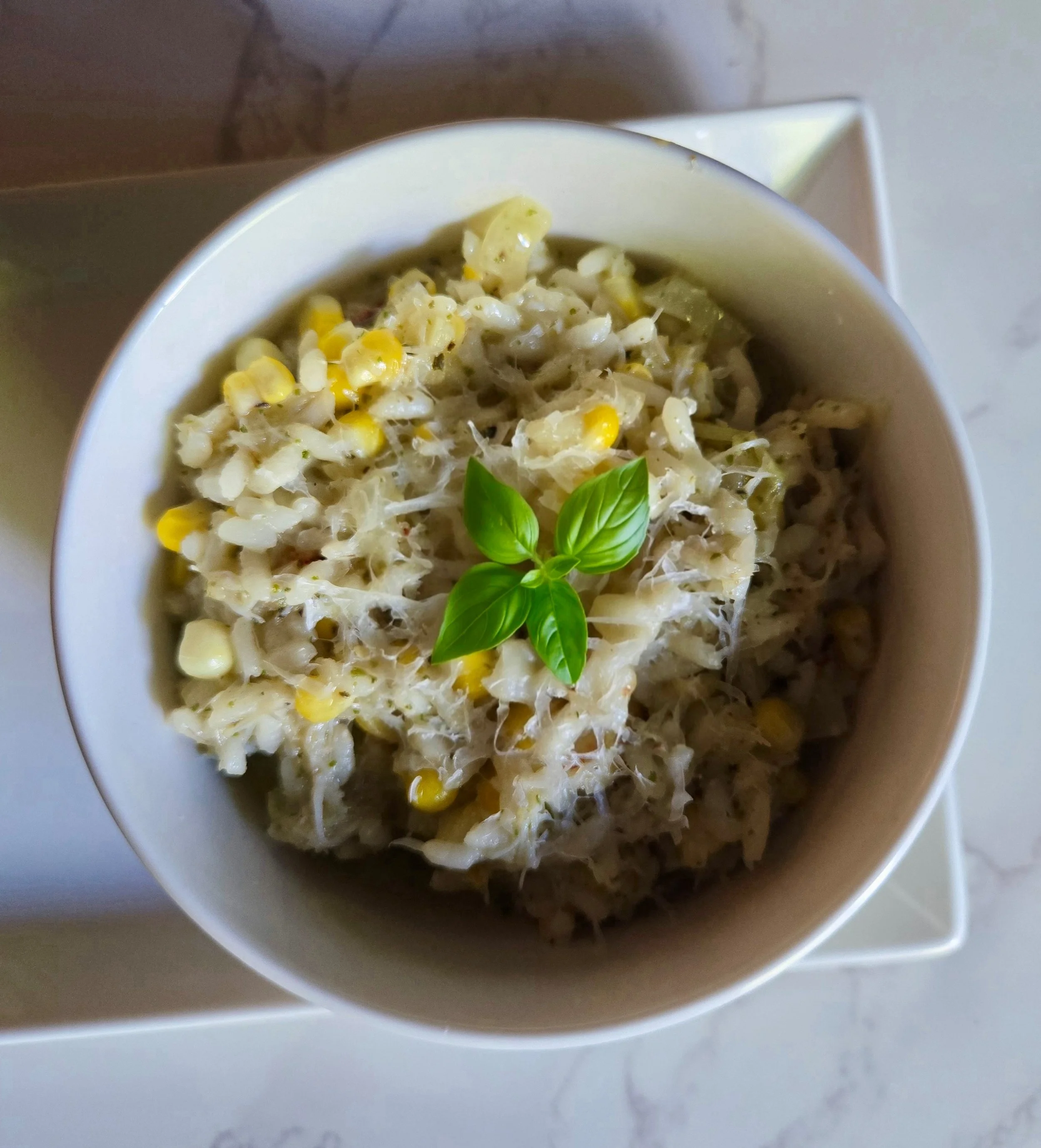
Dungeness Crab and Corn Risotto

Paley’s Place was my favorite restaurant in Portland, and then the chef, Vitaly Paley, moved to Hawaii. I always loved his risotto, but this one with crab and corn takes it over the top! This recipe can be found in his cookbook, The Paley’s Place Cookbook. Making a corn broth was new to me and it created such wonderful flavor without overpowering the Dungeness Crab. Make an effort to find Carnaroli rice, a medium-grain Italian rice, otherwise you can use Arborio. Note that it takes about an hour to prepare the corn broth.

I served with grilled romaine with anchovy-caper vinaigrette and parmesan from the same cookbook. Leftovers heat up beautifully, just add a touch more water, if needed. Makes 4 to 6 servings.
Recipe

4 c. corn broth (see recipe below)
1/4 c. olive oil
1 small onion, finely diced
Kosher salt and freshly ground black pepper
1-1/3 c. Carnaroli rice (or Arborio)
1 c. dry white wine
6 T. unsalted butter
2 small ears corn, shucked (use 2 from the corn broth recipe below)
1 c. Dungeness crabmeat, drained and picked clean
3/4 c. grated Parmesan cheese
1/4 c. loosely packed basil leaves, chin into thin strips
1/4 c. basil pesto (either make your own or store-bought)

for the Corn Broth (this is half of the cookbook recipe):
2 qts. water
4 ears of corn
1 T. salt

For the Corn Broth: In a large pot bring the water to a boil over high heat. Add the corn and salt and cook 5 minutes. Remove the corn and let cool. Using a paring knife, slice off the kernels from the cobs, letting them drop into a bowl. Reserve corn from two of the cobs for the risotto. Use the rest of the corn in another recipe or freeze for up to 2 weeks.

Halve the 4 stripped cobs crosswise and return to the pot of cooking water. Simmer over medium-low heat until the broth develops a definite corn flavor, about 45 minutes. Strain the broth into a saucepan, discarding the cobs, and keep warm to use in the risotto recipe.

for the Risotto:
In a Dutch oven, warm the olive oil over medium heat. Add the diced onion, season with salt and pepper, and cook without letting the onion color until the pieces are translucent, about 3 minutes. Add the rice all at once, stir to coat with the oil and cook, stirring frequently, for about 2 minutes.

Increase the heat to high, add the wine and continue to cook, stirring gently, until all the wine has been absorbed, about 3 minutes.

Pour in 3 c. of the hot broth and boil for 10 minutes, stirring occasionally to prevent the rice from sticking to the bottom of the pan. Don’t leave the spoon in the pan between stirrings or the rice will not cook evenly.

In a small skillet, melt 4 T. of the butter over low heat. Add the shucked corn and the crab and warm gently for 5 minutes.

After the rice has cooked for 10 minutes, test for doneness by biting into a few grains. When ready, the center of the grain should still have a little resistance and the risotto should still be fairly liquid. If the rice seems too chewy, cook for another minute. At this point, my rice needed a few more minutes. Mix the corn-crab mixture into the rice, stirring gently to distribute, and cook another 2 minutes. When ready to serve, the risotto should be the consistency of porridge. If it seems too dry, thin as needed with more broth. I used all the broth plus another 1/2 c. or so of water to get it to the right consistency.

Remove the pan from the heat and add the remaining 2 T. butter along with 1/2 c. of the grated cheese and stir vigorously for about 1 minute. The texture will become creamy and the butter and cheese completely incorporated. Stir in the pesto.

Serve in individual bowls, garnished with basil and the remaining 1/4 c. of Parmesan.
Seafood Gratin

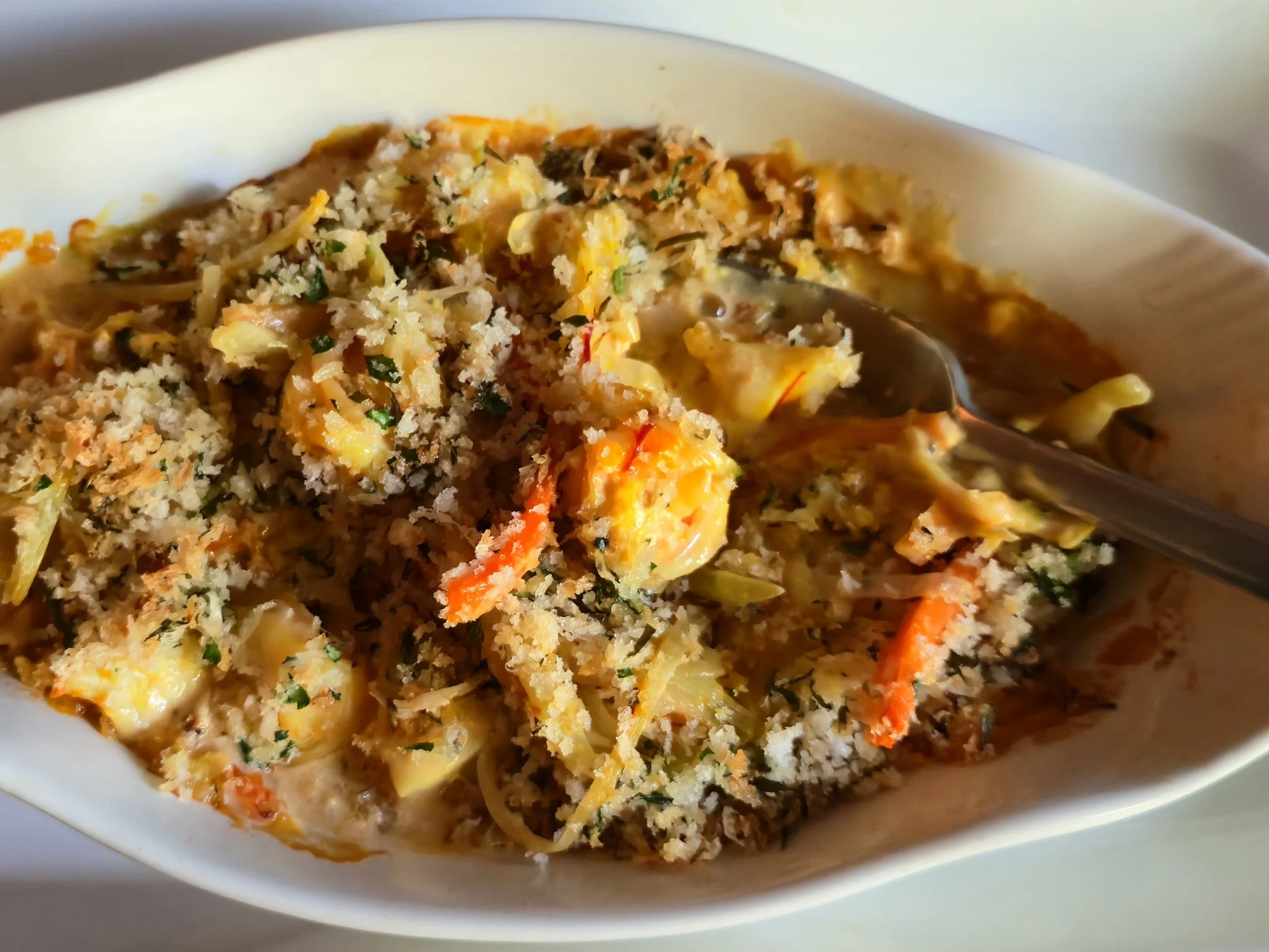
Wow, what a recipe — I give this one a solid 10! Shrimp and halibut simmered in a flavorful seafood stock with saffron, layered with sautéed julienned leeks, carrots and fennel, and topped with a panko, parmesan and tarragon mixture. The original recipe calls for a mixture of shrimp, halibut and cooked lobster, but since we don’t have lobster meat readily available here, I omitted it and increased the halibut. You could also use scallops.

Can’t get better than this. I’ll definitely be making this one again. And what’s even better, you can prepare ahead of your guests arriving and then pop in the oven to finish. Serves 4.

Recipe

1 c. seafood stock (I use Penzy’s Seafood Base)
1 c. heavy cream
1/2 c. + 3 T. white wine, divided
3 T. tomato purée (I use Sadaf brand)
1/2 tsp. saffron threads
8 oz. raw shrimp, peeled, deveined, and cut in half crosswise
1 lb. halibut, cut into 1-inch chunks
7 T. unsalted butter, divided
1 T. all-purpose flour
Kosher salt
freshly ground black pepper
3 c. julienned leeks, white and light green parts (I used 1 leek)
1-1/2 c. julienned carrots (I used 1 large carrot)
1 c. panko
1/3 c. freshly grated Parmesan
2 T. fresh Italian parsley, minced
1 T. fresh tarragon leaves, chopped
1 T. minced garlic (2 cloves)

Preheat the oven to 375-degrees. Place 4 individual gratin dishes on sheet pans.

Combine the stock, cream, 1/2 cup of the wine, the tomato purée, and saffron in a medium saucepan. Bring to a boil, lower the heat, and add the shrimp. After 3 minutes, use a slotted spoon to remove the shrimp to a bowl. Add the halibut to the stock for 3 minutes, until just cooked through, and remove to the same bowl.

Continue to cook the sauce until reduced by half, about 12 minutes. Mash 1 T. of the butter together with the flour. Whisk the butter mixture into the sauce along with 1 tsp. salt and 1/2 tsp. pepper. Simmer, stirring constantly, until thickened, about 5 minutes. Set aside.

Melt 3 T. of the butter in a medium sauté pan. Add the leeks and carrots and cook over medium heat for 5 minutes, until softened. Add the remaining 3 T. of wine, 1/2 tsp. salt, and 1/4 tsp. pepper and cook for 5 to 10 minutes, until tender. Set aside.

Combine the panko, Parmesan, parsley, tarragon and garlic. Melt the remaining 3 T. butter and mix it into the crumbs until they're moistened.

Divide the seafood among the 4 gratin dishes. Strew the vegetables on top of each dish. Pour the sauce equally over the seafood and vegetables and spoon the crumbs evenly on top. Bake for 20 minutes, until the top is browned and the sauce is bubbly. Serve hot.

– Ina Garten, Food Network

Sheet Pan Turkish-Spiced Chicken

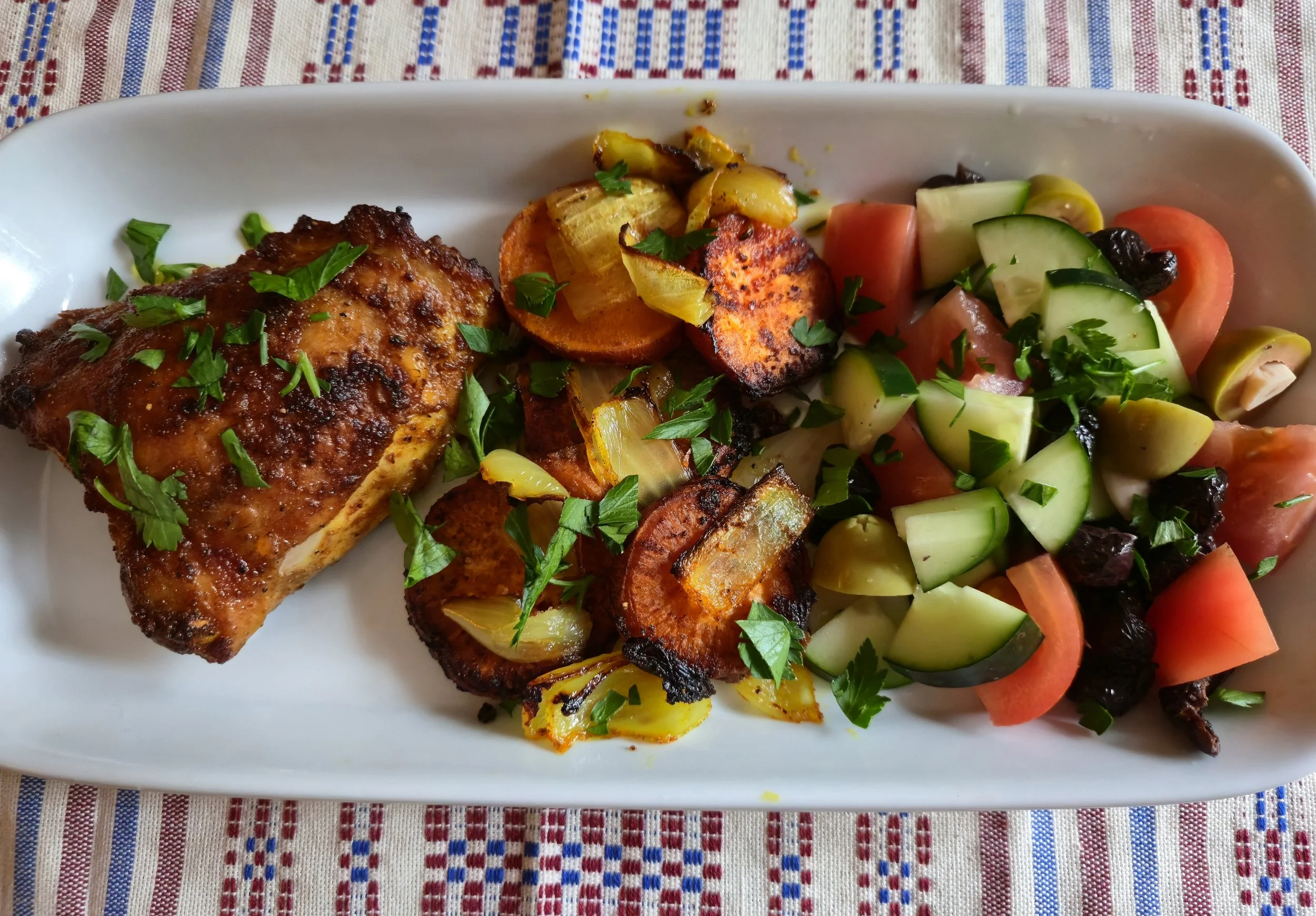
This easy sheet pan dish is packed with flavor from lots of fabulous spices, but it doesn’t overwhelm your palate — just a perfect combination. Fresh cucumber, tomato, olives and parsley is added when serving, providing a fresh, crisp finish to the dish. I marinated my chicken the night before for optimum results. Serves 4 to 6.

Recipe

Marinade:
1/2 c. olive oil
3 T. fresh lemon juice
2 tsp. ground cumin
2 tsp. ground coriander
2 tsp. paprika
2 tsp. smoked paprika
1 tsp. ground turmeric
1/2 tsp. ground cinnamon
1/4 tsp. cayenne pepper
1/4 tsp. crushed red pepper flakes
6 cloves garlic, minced
1 tsp. Kosher salt
1/2 tsp. freshly ground black pepper

Chicken:
4 to 6 bone-in, skin-on chicken thighs (depending on number of servings needed)
cooking spray
2 medium yellow onions, cut in wedges
2 small sweet potatoes, cut into 3/4-inch thick rounds
Kosher salt
freshly ground black pepper
2 tomatoes, cut into 6 wedges
1 cucumber, cut into sliced rounds and then quartered
1/2 c. pitted green or black olives
1/3 c. fresh Italian parsley, roughly chopped

Place the chicken in a 1 gallon zip-lock plastic bag. Pour in the marinade, seal and turn to completely coat. Let it marinate at room temperature for 1 hour or refrigerate for up to overnight. Remove the chicken from the refrigerator 1 hour before cooking to let it come to room temperature.

Preheat the oven to 425-degrees. Spray a rimmed baking sheet with cooking spray.

Remove the chicken from the marinade and place it skin-side up on the baking sheet. Add the onion and sweet potatoes to the plastic bag and coat the pieces with the marinade, then arrange in a single layer around the chicken. Season lightly with salt and pepper. Roast until the chicken is browned and the vegetables are tender, 35-45 minutes. If you desire your chicken skin to be crispier, return the pan to the upper rack of the oven after roasting and broil for 5 minutes. I roasted mine for about 43 minutes and it was perfect.

Remove from the oven and arrange the chicken and vegetables on a serving platter. Scatter the tomatoes, cucumbers, olives and parsley on top. Season with salt and pepper and serve.

– Tracy Pollan, “Mostly Plants”

Cauliflower Cake

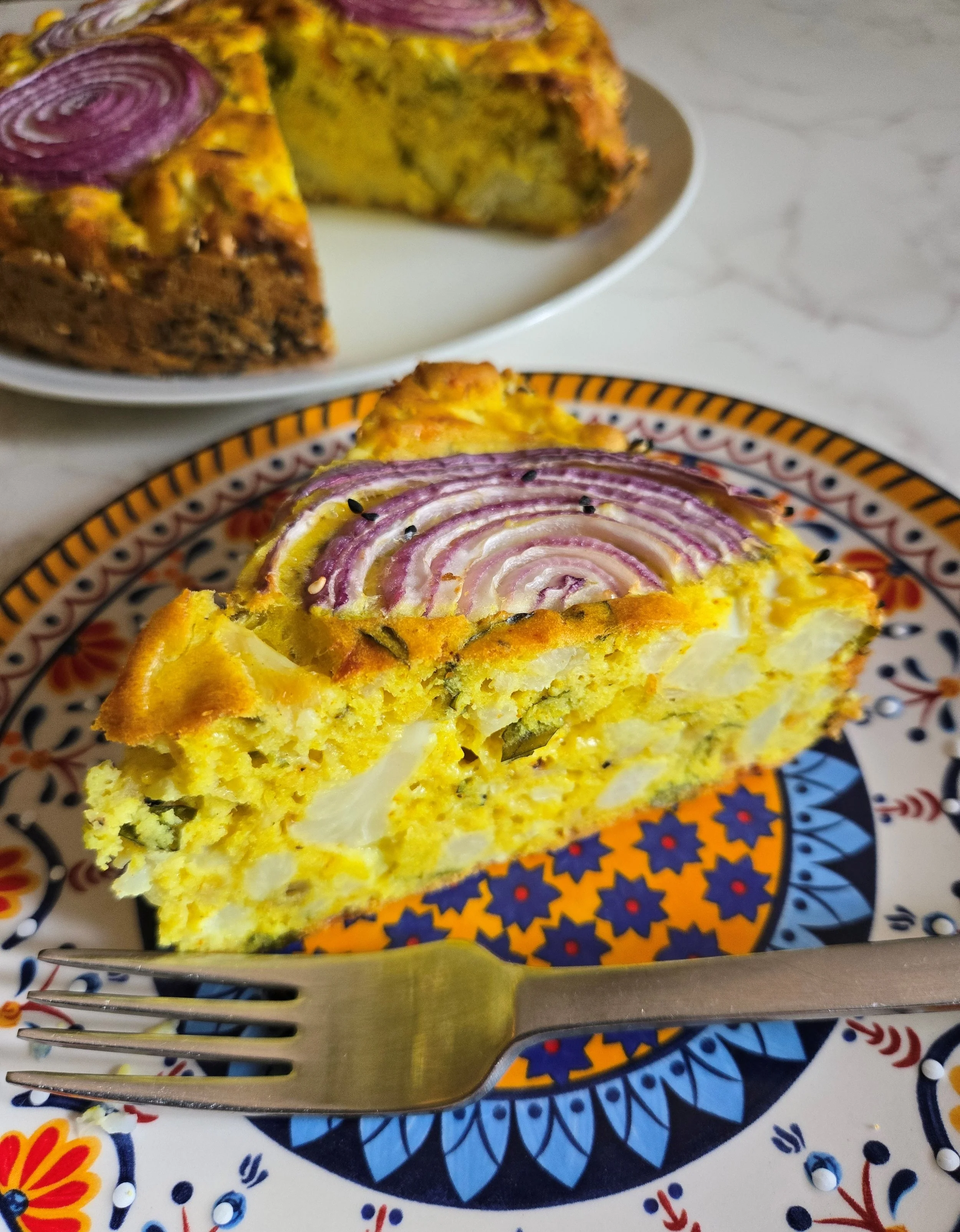
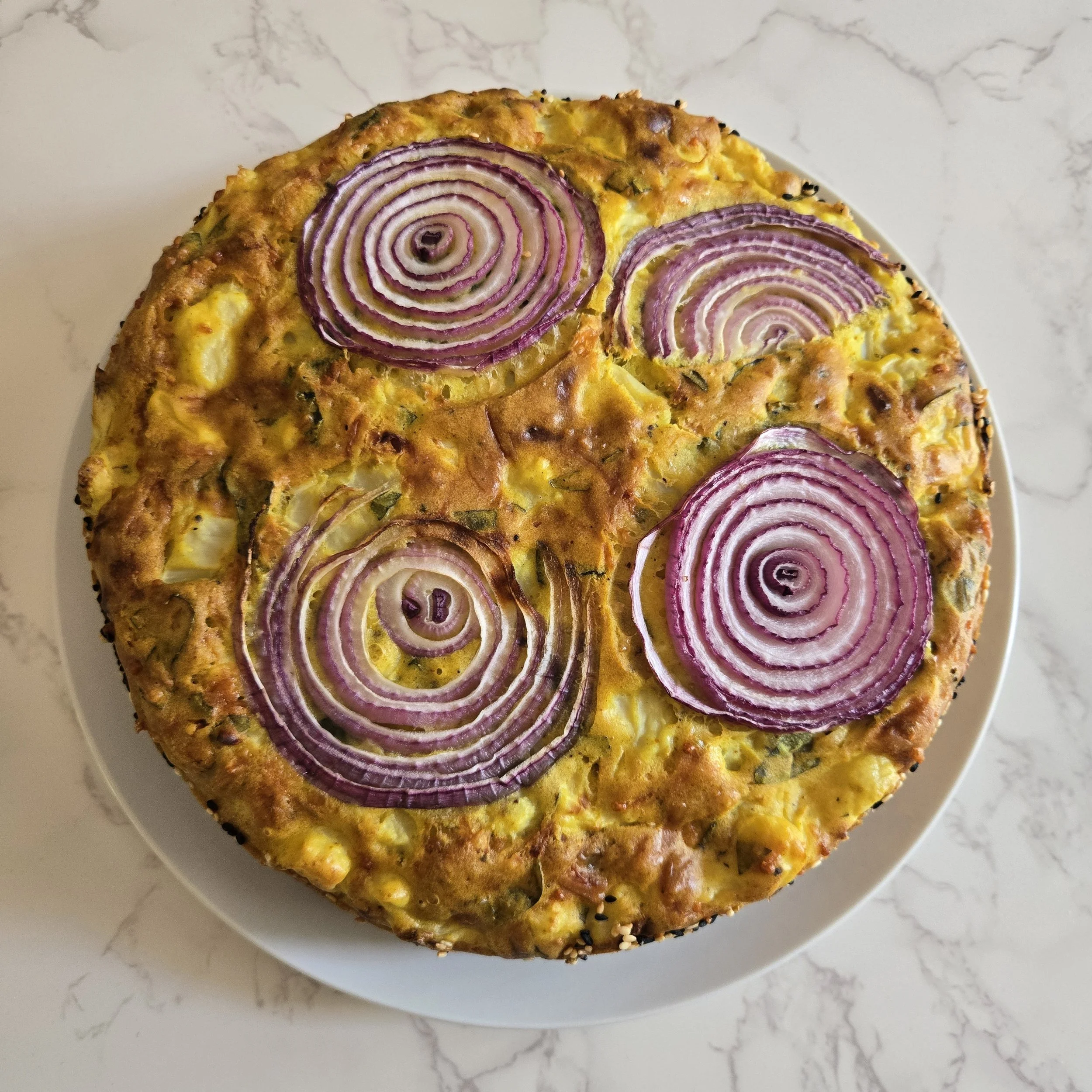
Yet another Yotam Ottolenghi unusual recipe, this time using cauliflower in a cake! Very mild in flavor with a slight hint of rosemary, this cake can be served for breakfast, lunch or dinner and is good right out of the oven, cold or at room temperature. Goes well with a simple green salad and a glass of chardonnay. Serves 6.

Recipe

1 small cauliflower, outer leaves removed, broken into 1-1/4-inch florets (about 4 c.)
2 tsp. Kosher salt, divided
1 medium red onion
5 T. olive oil
1 tsp. finely chopped fresh rosemary
melted unsalted butter, for brushing
1 T. nigella seeds
1 T. white sesame seeds
8 large eggs
1/2 c. fresh basil leaves, coarsely chopped
1-1/2 c. coarsely grated Parmesan
1 c. all-purpose flour
1-1/2 tsp. baking powder
1/2 tsp. ground turmeric
freshly ground black pepper

Preheat oven to 375-degrees.

Place the cauliflower florets and 1 tsp. of the salt in a medium saucepan. Cover with water and simmer over medium-high heat until the florets are quite soft, about 15 minutes. They should break when pressed with a spoon. Drain and set aside in a colander to dry.

Cut 4 round slices, each 1/4-inch, off one end of the onion and set aside. Dice the rest of the onion and place in a small frying pan with the oil and rosemary. Cook over medium heat, stirring occasionally, until soft, about 10 minutes. Remove from the heat and set aside to cool.

Meanwhile, line the base of a 9 1/2-inch springform pan with parchment paper. Brush the sides of the pan with melted butter, then mix together the nigella and sesame seeds and toss them around the sides of the pan so they stick. If you can’t find nigella seeds, use 2 T. of white sesame seeds.

Transfer the onion mixture to a large bowl. Add the eggs and basil and whisk well to combine. Add the cheese, flour, baking powder, turmeric, remaining 1 tsp. salt and plenty of pepper. Whisk until smooth. Add the cauliflower and stir gently, trying not to break up the florets.

Pour the cauliflower mixture into the pan, spreading it evenly, and arrange the reserved onion rings on top. Bake until golden brown and set, about 45 minutes. A knife inserted into the center of the cake should come out clean. Let cool at least 20 minutes before slicing and serving.

– Yotam Ottolenghi

Egg and Swiss Chard Gratin

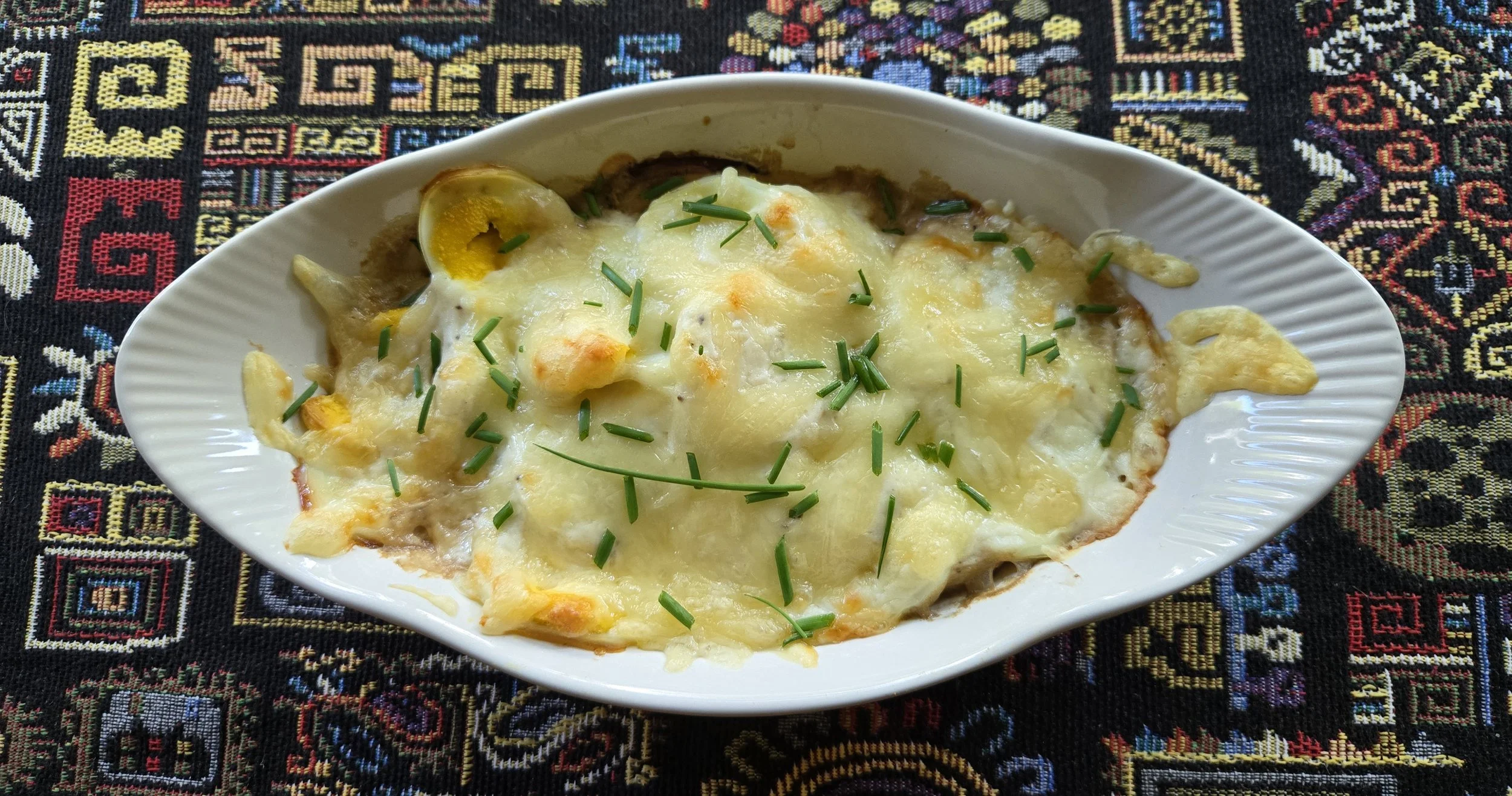
A great breakfast, lunch, dinner first course or main course, you can’t go wrong with eggs! This recipe is versatile — you can change up the veg or add ham or sausage. You can make it in a larger 5- to 6-cup gratin or casserole dish, or in four individual gratin dishes, like I did here. I prepared the gratin dishes a few hours ahead of time and kept them in the fridge until ready to bake. They also reheat well a few days after cooking. Makes 4 servings.

Recipe

8 large eggs (2 eggs per person)
1 bunch Swiss chard (about 12 oz.)
1/2 tsp. salt
1/2 tsp. freshly ground black pepper
1 T. olive oil
8 oz. mushrooms, washed and sliced
1 c. Swiss cheese (or gruyere), grated

Béchamel Sauce:
1-1/2 T. butter
1-1/2 T. flour
1-1/2 c. milk
1/2 tsp. salt
1/2 tsp. freshly ground black pepper

For the eggs bring 3 c. water to a boil in a large saucepan. On the round part of the egg, poke a hole with a push pin, add the eggs and bring the water back to a boil, then reduce the heat and cook at a gentle boil for 10 minutes. Pour out the hot water and shake the pan to crack the eggs. Fill the pan with cold water and let the eggs cool thoroughly.

Preheat the oven to 350-degrees.

Wash the Swiss chard and cut the ribs and leaves into 2-inch pieces. Pile them, still wet, into a skillet, add 1/4 tsp. each of the salt and pepper, cover and cook over high heat for about 5 minutes, just until the chard wilts. Uncover and cook for another 1-2 minutes to evaporate most of the moisture.

Spread the chard on the bottom of the gratin dish(es).

Heat the oil in the skillet you used to cook the chard and add the mushrooms and 1/4 tsp. each of the salt and pepper, and cook for 2 minutes until most of the moisture has evaporated. Spread the mushrooms on top of the chard.

Shell the cooled eggs under running cool water. Slice the eggs using an egg slicer or knife and arrange on top of the mushrooms.

For the béchamel sauce melt the butter in a medium saucepan. Whisk in the flour and cook for about 30 seconds. Add the cold milk all at once along with 1/2 tsp. each salt and pepper. Bring to a strong boil, whisking constantly until the mixture thickens. Boil for 10 seconds, then pour over the eggs and spread evenly. Top with the grated cheese.

Place the dish(es) on a baking sheet and bake for 30 minutes until the gratin is beautifully browned on top. Serve hot.

– Jacques Pépin, "Heart & Soul"

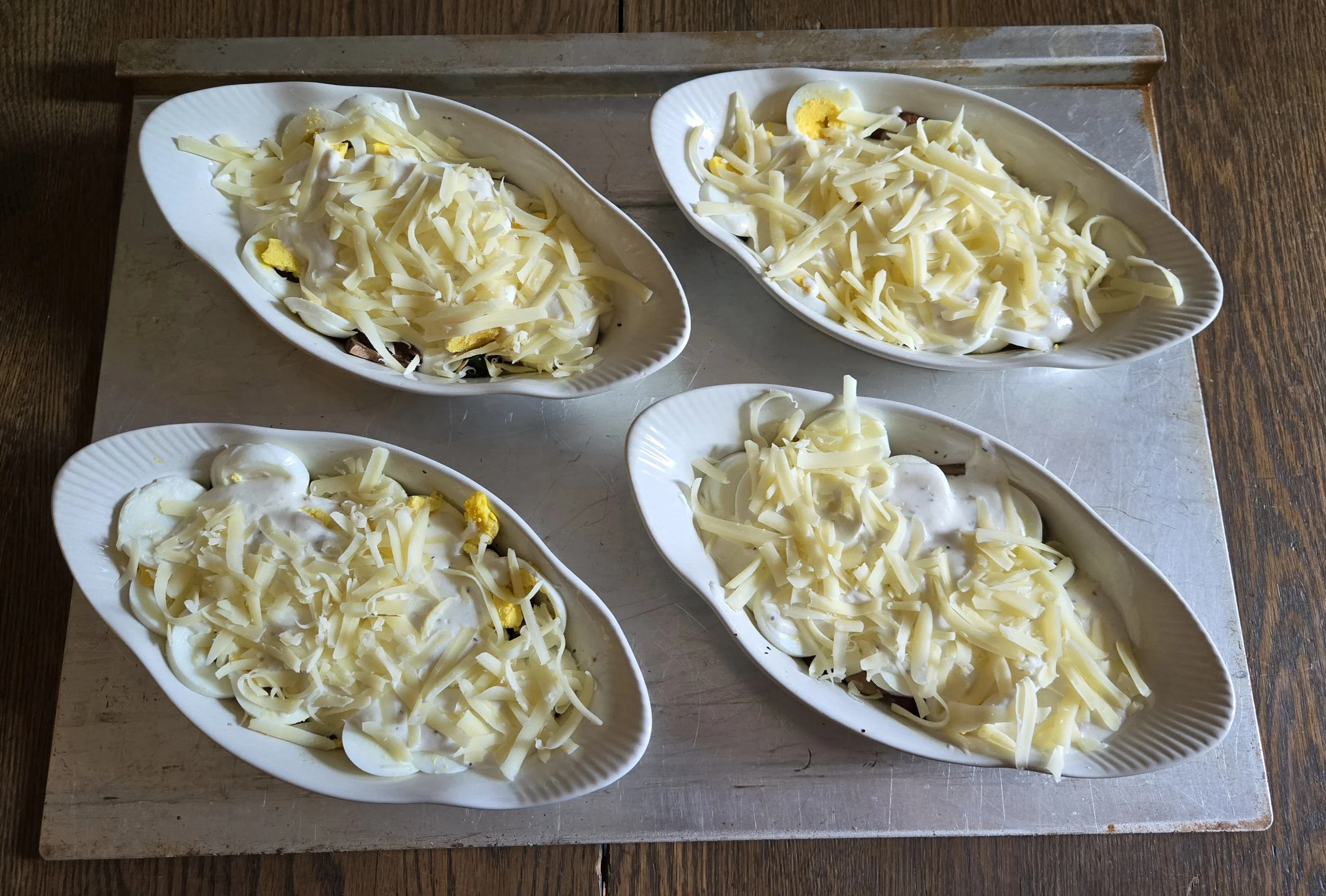
Ready for the oven

Venison Steaks in Sweet & Sour Sauce

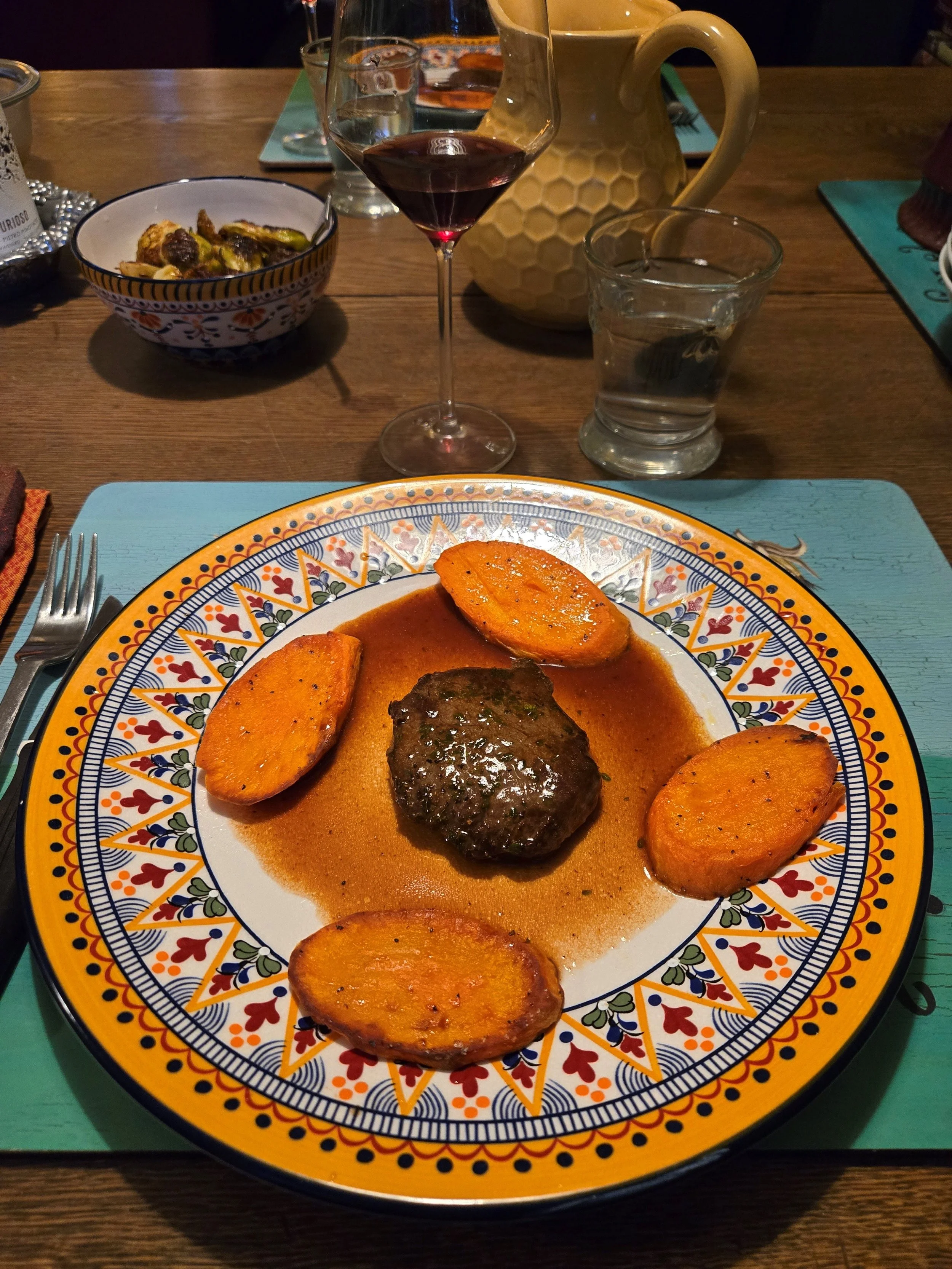
A neighbor went hunting and gave me a few venison steaks. I’ve never cooked venison before, so of course I turned to Jacques Pépin to provide the perfect recipe. No need to soak in milk as I’ve read elsewhere to remove a “gamey” taste. His procedure and ingredients made this a memorable and delicious meal. Serve with a simple side of sweet potatoes (Jacques’ recipe also included below) and asparagus, prosciutto and brie puff pastry bites. Serves 4.

Recipe

1-1/2 lbs. venison tenderloin, cut into 4 steaks
1 tsp. olive oil
1 tsp. fresh thyme, chopped
1 T. ketchup
1 T. currant jelly (or seedless raspberry jam)
2 tsp. soy sauce
1/4 c. cold water
1 T. peanut oil
1 T. unsalted butter, divided
1/4 tsp. salt
1/4 tsp. freshly ground black pepper
1 T. chopped shallot
2 T. red wine vinegar
2 T. red wine

Using a meat pounder, pound the steaks gently until each is about 3/4-inch thick. Rub the steaks with the oil and sprinkle with the thyme. Arrange the steaks in a single layer on a plate, cover with plastic wrap, and refrigerate for at least 1 hour before cooking. (The venison can marinate for up to 8 hours.)

Mix the ketchup, jelly, soy sauce and water together in a small bowl. Set aside.

When you are ready to cook the steaks, heat the oven to 160-degrees.

Heat the peanut oil and butter in a large heavy skillet until hot. Sprinkle the steaks with the salt and pepper, place them in the skillet, and sauté over medium-high heat for 2 to 2-1/2 minutes on each side for medium-rare. Transfer the steaks to an ovenproof plate (leaving the drippings in the pan) and keep warm in the oven while you make the sauce.

Add the shallot to the drippings and sauté for about 20 seconds. Add the vinegar and wine and cook until most of the liquid has evaporated, about 1-1/2 minutes. Add the jelly mixture and mix well, then stir in the butter. Boil for 10 seconds, and strain through a fine strainer.

Place a steak on each of four plates, coat the steaks with the sauce, and serve.

– Jacques Pépin, "Essential Pépin"

Skillet Sweet Potatoes

1 large long sweet potato (about 1 lb.), peeled and cut into 12 slices about 1/4-inch thick
1 T. unsalted butter
1 T. corn oil
1/2 c. water
1/4 tsp. salt

Arrange the sweet potato slices in a single layer in one very large or two slightly smaller nonstick skillets. Add the butter, oil, water and salt. Bring to a boil, cover and boil gently over high heat for about 5 minutes. Most of the water will have evaporated and the potatoes will be soft. Continue to cook, uncovered, over medium heat, turning, until the slices are nicely browned on both sides, about 2 additional minutes per side. Serve.